One Ocean, One Mission
 by
Jacqueline Herbst
· · Updated · 5 min read
by
Jacqueline Herbst
· · Updated · 5 min read

She is doing this by swimming the entire South African coastline, from Kosi Bay on the Mozambican border to Cape Town. Beyond the physical challenge, the project, called the “One Ocean Swim”, aims to deliver an important environmental message: there are no borders in the ocean. It is one interconnected body of water that needs to be protected.
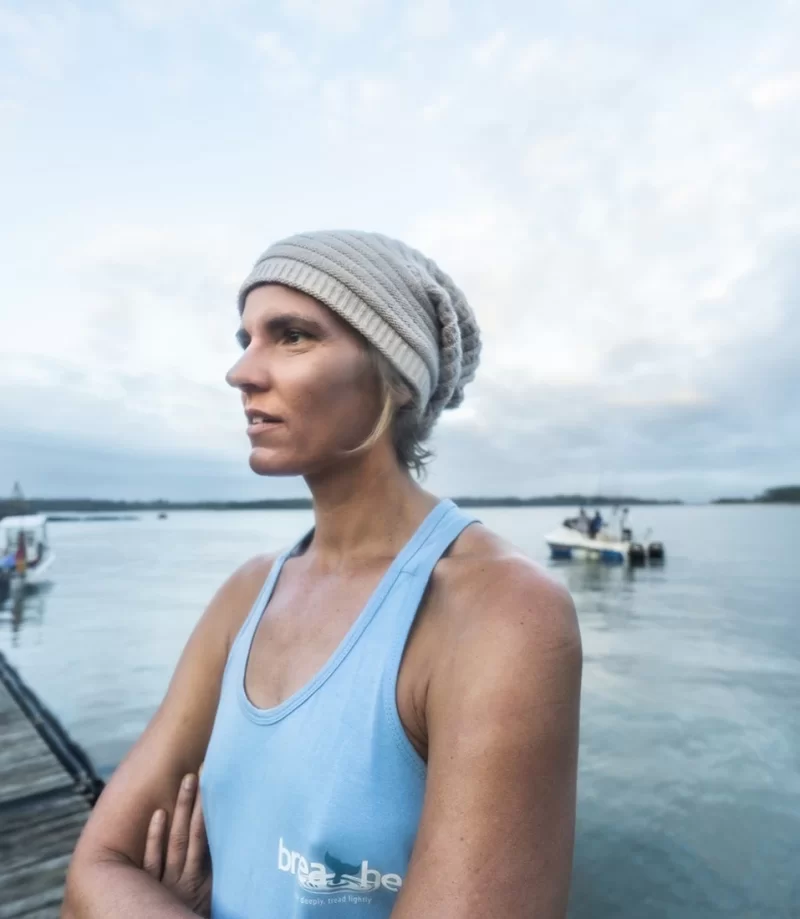
Sarah says humanity largely treats the ocean like a rubbish dump, yet the waste that ends up there never truly disappears. "While the ocean is clever and spits some of it out on the beach, much of the trash gets stuck underwater, suffocating coral reefs and strangling marine animals."
While recycling has its place, Sarah says it does not make the waste disappear. The real solution, she believes, is to reconsider whether single-use items are necessary in the first place. Just as every stroke brings her closer to Cape Town, every decision to stop using a single-use plastic item can make a difference. Sarah first stopped using plastic straws and switched to refillable coffee cups and water bottles. She now buys fizzy drinks only in cans, takes her own container when buying sushi, and packs unpackaged fruit and vegetables in cardboard boxes from home. She also uses a reusable menstrual cup, buys cleaning products from local suppliers who refill her containers, and purchases much of her clothing from thrift stores.
The Swim
A long journey
The idea for the One Ocean Swim was born during lockdown. By February 2021, the three-month weather window for the first leg of the journey, from Durban to Gqeberha, had arrived, and Sarah and her support crew set off on a demanding, multi-year adventure that is still underway.
The swim can only take place during favourable conditions. Attempting it, for example, in winter– when Cape storms batter the coastline and pelagic fish and sharks follow the annual sardine run – would be far too dangerous.
Just as tackling ocean pollution happens one decision at a time, Sarah's epic swim is being completed in manageable stages. She first swam from Durban to Gqeberha before completing another leg from southern Mozambique to Sodwana. During the Philocaly Trail, she swam parallel to the route from Umtunzini to Durban. This was followed by the stretch from Sodwana to St Lucia and, most recently, she closed the gap between St Lucia and Mtunzini.
Swimming almost 50km offshore in the Agulhas Current, Sarah was both disappointed and concerned by the lack of marine life she encountered during the latest leg. She believes climate change, shipping activity and seismic surveying could all be contributing to the decline in wildlife in the open ocean.
Behind the scenes
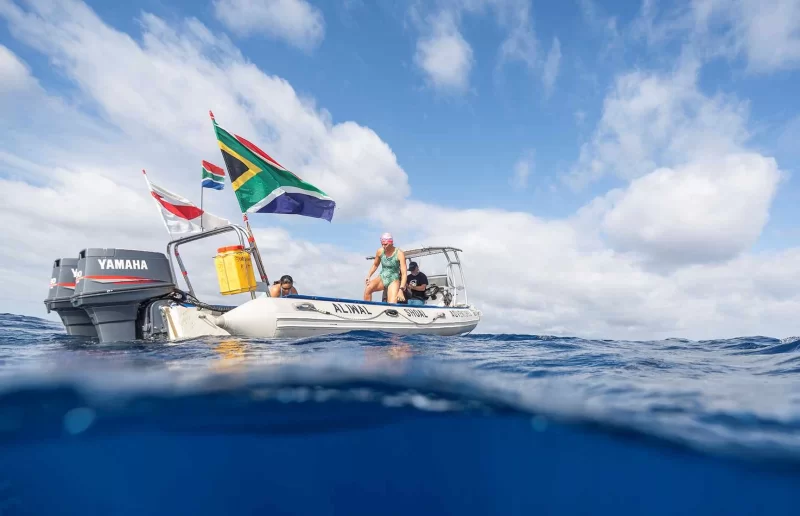
Taking on a swimming mission like this is far more complicated and challenging than most people realise. Every swim day starts with a three- to four-hour boat trip to find the Agulhas Current. "Even using satellite technology, finding the current can sometimes be like finding a needle in a haystack," says Sarah. But when they find it, they know immediately as the water temperature rises to about 27°C. Although the Agulhas Current can be up to 300km wide, Sarah says it behaves like a dynamic river that is constantly shifting. Once the current has been located, Sarah dives in and swims for four hours, stopping every 30 minutes to eat and maintain her energy levels. "The current moves very fast. Swimming in it is fun – it feels like you fly," she says.
As the Agulhas Current is a migration route for species such as turtles, encounters with marine life are common, which is why she felt it was unusual to see very little wildlife on the latest completed leg from St. Lucia to Mtunzini. After the swim, it is back onto the boat for a long, bumpy ride to shore. The wind also plays a major role. While a north-easterly is ideal because it allows Sarah to swim with the waves, it also brings choppy conditions and blue bottles, which frequently sting her. A south-westerly, on the other hand, means swimming into the waves.
Sarah's support crew includes a skipper, a second skipper who is also a marine biologist, her coach, a kayaker, a photographer and a two-person land crew responsible for transporting the vehicles. Behind the scenes, there is also extensive planning and administration to keep the expedition running smoothly. Another challenge is a lack of sleep. "At the end of the day, you are sore and tired, but because your adrenaline is pumping and cortisol levels are elevated, you don't sleep well," she explains.
Sarah hopes to complete the final stretch of coastline between Gqeberha and Cape Town in two or three more legs, depending on funding. While parts of the expedition have been sponsored by corporate partners, the team itself, which has at times delayed progress, has funded much of it. The biggest expense, she says, is fuel to keep both the support vehicles and the boat operating for weeks at a time.
Instagram: https://www.instagram.com/sarahfergusonza/?hl=en
Photos: Nicky Lloyd
Written by
Jacqueline Herbst
Jacqui brings a style of storytelling that informs and engages readers.
READ MORE
New Weylandts Sibaya Showroom
by Rainmaker Marketing · October 1, 2026

Step into Forgotten Island at Gateway
by The Umhlanga Writer · September 10, 2026

Heritage & High-fashion
by Mariska Moodley · September 6, 2026